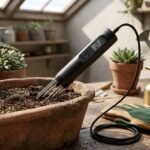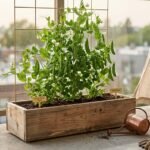
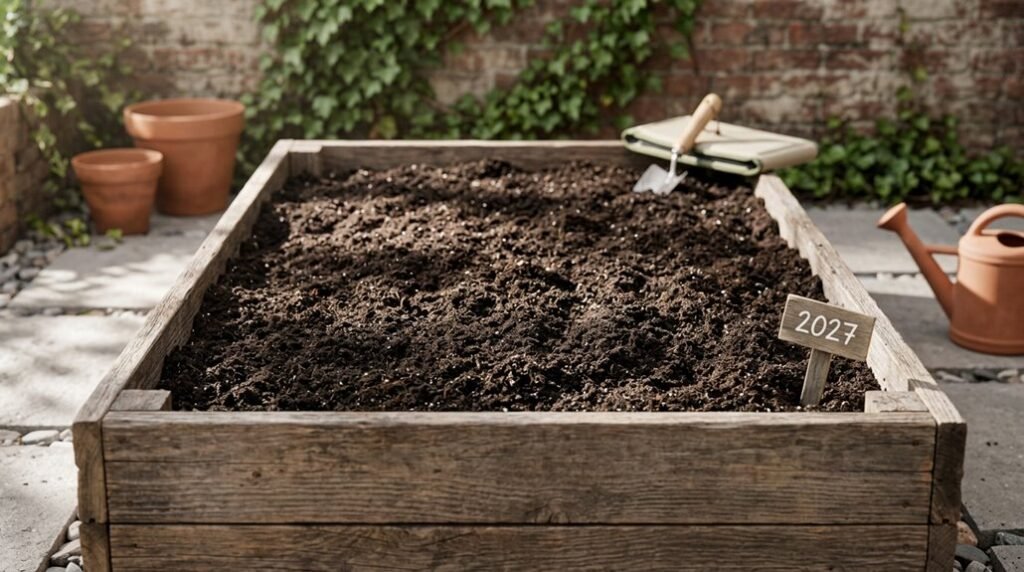
Your soil’s pH shifts more dramatically in raised beds than in-ground gardens, often swinging a full point in either direction within a single season. And that matters, because most vegetables lock up nutrients when pH strays outside the 6.0–7.0 sweet spot.
You’re about to see which seven mixes solve this problem for 2027, from coconut coir bases that refuse to compact, to blends loaded with mycorrhizae that literally extend your plants’ root reach. But here’s the catch: depth requirements vary wildly. Tomatoes demand 18 inches, while you’ll harvest radishes from just six.
The right soil depends on what you’re growing, how long you want it to last, and whether you’re filling a galvanized bed or lining a plastic one. Stick around, and you’ll match your setup to a mix that actually earns its keep.
| Back to The Roots Organic Seed Starting Block (12 Quarts) | Best Organic Block | Product Category: Seed starting mix | Primary Use: Seed starting, vegetables, flowers, herbs | Organic/Sustainable Aspect: OMRI Listed, peat-free, organic | VIEW LATEST PRICE | Read My Analysis | |
| Burpee 9 Quarts Premium Organic Potting Soil Mix | Best Container Mix | Product Category: Potting soil mix | Primary Use: Container gardening, indoor/outdoor plants | Organic/Sustainable Aspect: OMRI Listed, all-natural, coconut coir | VIEW LATEST PRICE | Read My Analysis | |
| BIJOKETTEN 3 Pack Plastic Raised Garden Bed with Drainage Hole | Best Fabric Bed | Product Category: Raised garden bed container | Primary Use: Vegetables, herbs, flowers | Organic/Sustainable Aspect: PE material, reusable design | VIEW LATEST PRICE | Read My Analysis | |
| Raised Bed Hugelkultur for Small Gardens: Build Mini Mounds & Grow More Food | Best Technique Guide | Product Category: Gardening guide/book | Primary Use: Raised bed hugelkultur gardening | Organic/Sustainable Aspect: No-dig, organic matter cycling | VIEW LATEST PRICE | Read My Analysis | |
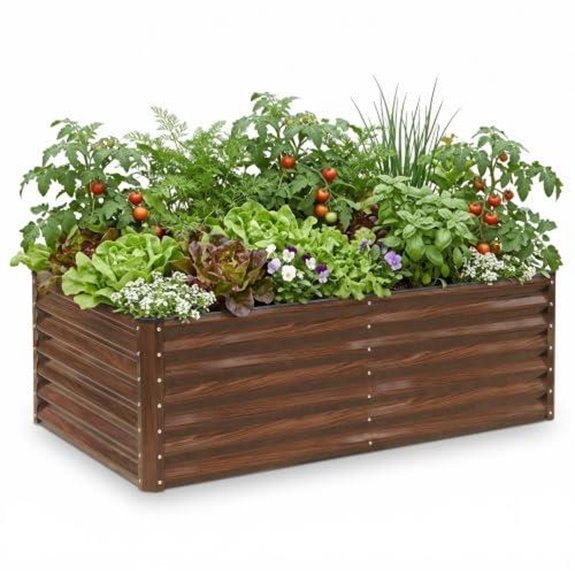
| SnugNiture Galvanized Raised Garden Bed 6x3x2FT | Best Metal Bed | Product Category: Raised garden bed container | Primary Use: Vegetables, flowers, herbs, fruits | Organic/Sustainable Aspect: Galvanized steel, long-term reusable | VIEW LATEST PRICE | Read My Analysis | |
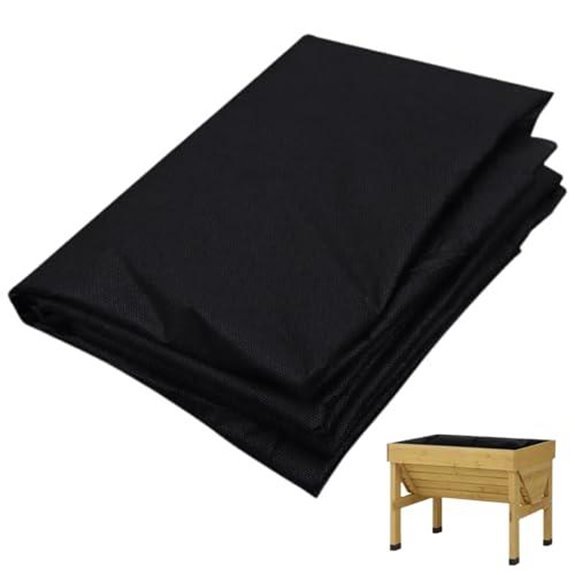
| Wshxjzyay 63×114 inch Raised Garden Bed Liner | Best Bed Liner | Product Category: Bed liner/weed barrier | Primary Use: Soil containment, drainage support | Organic/Sustainable Aspect: Breathable non-woven fabric | VIEW LATEST PRICE | Read My Analysis | |
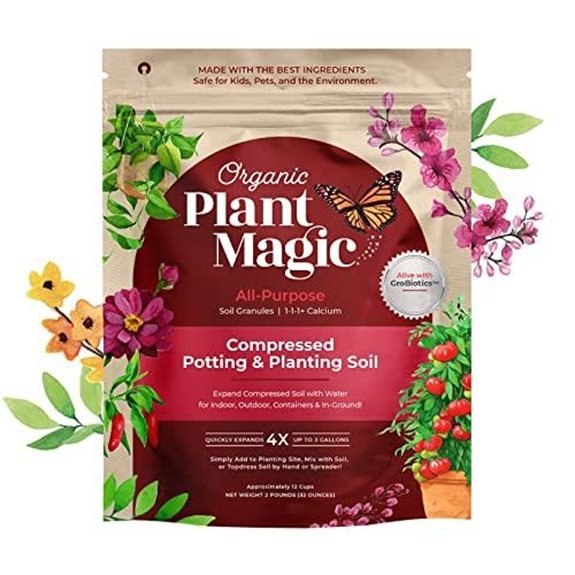
| Compressed Organic Potting Soil with Coconut Coir & Worm Castings | Best Compressed Soil | Product Category: Compressed potting soil | Primary Use: Seeds, transplants, containers, raised beds | Organic/Sustainable Aspect: 100% natural, organic components | VIEW LATEST PRICE | Read My Analysis |
More Details on Our Top Picks
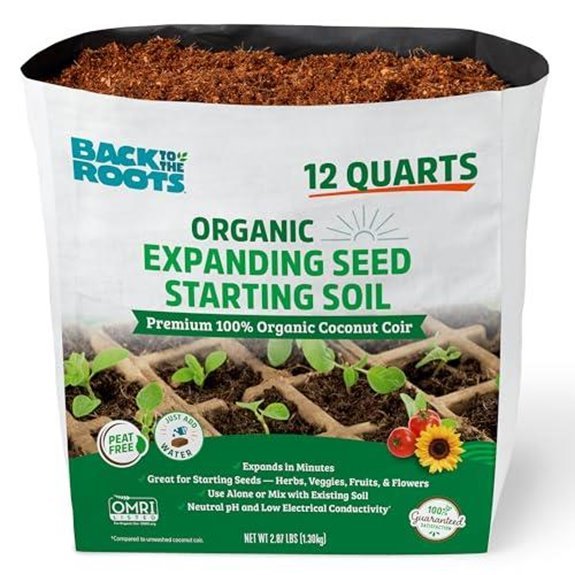
Back to The Roots Organic Seed Starting Block (12 Quarts)
Who’s after an organic option that won’t break your back or your budget? You’ll love this compressed block from Back to The Roots, because it expands to a full 12 quarts of seed-starting mix once you add water. No lugging heavy bags up your driveway!
Here’s what you’re getting:
- Peat-free, OMRI Listed organic mix that’s pH balanced and ready for vegetables, flowers, herbs, or any seeds you’ve got planned
- Compressed coconut coir base that fluffs up with a little moisture, which is honestly pretty satisfying to watch
- Versatility: use it straight in trays, blend into existing beds, or amend tired container soil
And if something goes wrong? They’ll make it right with refunds or replacements, no argument. Plus, their GROWONEGIVEONE program lets you nominate a classroom for a free kids’ kit when you share your garden photos.
Model 49026 covers all the standard lawn and patio categories too.
- Product Category:Seed starting mix
- Primary Use:Seed starting, vegetables, flowers, herbs
- Organic/Sustainable Aspect:OMRI Listed, peat-free, organic
- Water Management:pH balanced, standard drainage
- Volume/Size/Coverage:12 quarts (expanded)
- Reusability/Storage:Compressed block, resealable concept
- Additional Feature:GROWONEGIVEONE classroom donation
- Additional Feature:pH balanced formula
- Additional Feature:100% satisfaction guarantee
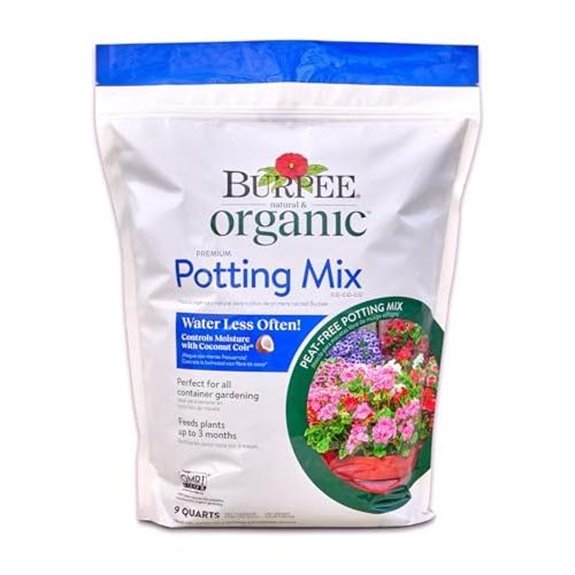
Burpee 9 Quarts Premium Organic Potting Soil Mix
What if you’re working with containers rather than sprawling beds? Burpee’s 9 Quarts Premium Organic Potting Soil Mix has you covered, and it’s OMRI Listed too!
This all-natural blend combines coconut coir (that fluffy, sustainable fiber that holds moisture like a champ) with slow-release plant food. You’ll get instant feeding plus steady nutrition for up to three months.
The coir keeps roots happy between waterings, so you won’t stress if life gets busy.
Here’s what makes it shine for raised beds and containers:
- 9 quarts fills multiple pots
- Works for vegetables, herbs, and flowers
- Indoor or outdoor flexibility
Burpee’s been around since 1876, so they’ve learned a thing or two about what plants crave. And when you’re arranging flower pots, remember their tip: tall plants in back, mounding ones in the middle, spillers trailing over the edge. Dimension makes all the difference!
- Product Category:Potting soil mix
- Primary Use:Container gardening, indoor/outdoor plants
- Organic/Sustainable Aspect:OMRI Listed, all-natural, coconut coir
- Water Management:Coconut coir retains moisture
- Volume/Size/Coverage:9 quarts
- Reusability/Storage:Bagged, storable
- Additional Feature:Feeds up to 3 months
- Additional Feature:Since 1876 heritage
- Additional Feature:Instant plant food
BIJOKETTEN 3 Pack Plastic Raised Garden Bed with Drainage Hole
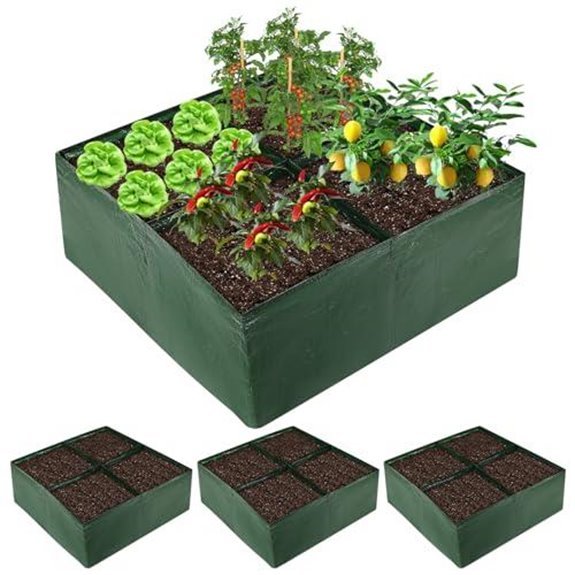
Looking for a raised bed that won’t crack under pressure? You’ll find your match in the BIJOKETTEN 3 Pack Plastic Raised Garden Bed with Drainage Hole.
These rectangle planter bags use high-quality PE material that’s durable and flexible, so you can leave them outside through rough weather without worry. Each bed measures 2x2x0.82 feet and holds approximately 23.7 gallons, giving you serious growing space for vegetables, herbs, or flowers.
Here’s what makes them stand out:
- Smart 4-Grid Design: Keeps roots from circling and encourages downward growth. You can plant different varieties side by side without tangled messes.
- Built-In Drainage: Bottom holes let air reach roots and stop overwatering before root rot sets in.
- Collapsible Storage: Fold them flat when the season ends.
You get three green bags per set. And because they’re lightweight plastic, you’ll move them from patio to yard without breaking a sweat.
- Product Category:Raised garden bed container
- Primary Use:Vegetables, herbs, flowers
- Organic/Sustainable Aspect:PE material, reusable design
- Water Management:Bottom drainage holes
- Volume/Size/Coverage:23.7 gallons per bed, 3-pack
- Reusability/Storage:Collapsible, off-season storage
- Additional Feature:4-Grid root design
- Additional Feature:Collapsible off-season storage
- Additional Feature:Prevents root circling
Raised Bed Hugelkultur for Small Gardens: Build Mini Mounds & Grow More Food
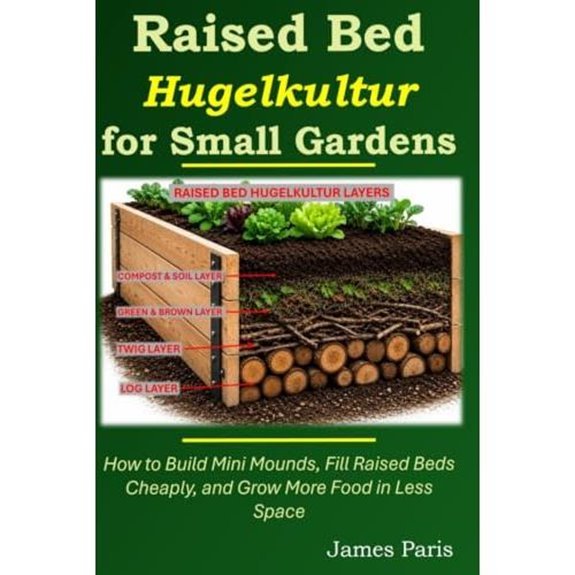
Want more harvest from your tiny plot? Raised bed hugelkultur lets you grow more food in less space by burying wood and organic matter beneath your soil.
Here’s how you’ll build mini mounds that work:
- Gather fallen branches, logs, and composted material for your core
- Layer these beneath quality raised bed soil, forming small mounds that maximize surface area
- Shape for drainage, then plant intensively with compact varieties
The magic happens underground. Decomposing wood releases nutrients gradually, while the sponge-like core retains moisture so you’ll water less.
You’re essentially creating tiny reservoirs that feed crops all season.
Top your beds with mulch to suppress weeds and sustain microorganisms. And because you’re not tilling, you’re preserving soil life that makes nutrients available naturally.
Plan for succession planting in these enriched mounds. Bush beans, compact tomatoes, and leafy greens thrive here.
Monitor moisture periodically, refresh organic layers as seasons change, and watch your small space outperform traditional beds!
- Product Category:Gardening guide/book
- Primary Use:Raised bed hugelkultur gardening
- Organic/Sustainable Aspect:No-dig, organic matter cycling
- Water Management:Hugelkultur core conserves moisture
- Volume/Size/Coverage:Small garden/mini mounds scale
- Reusability/Storage:Perennial no-dig system, long-term
- Additional Feature:No-dig gardening method
- Additional Feature:Mini mounds technique
- Additional Feature:Buried wood core
SnugNiture Galvanized Raised Garden Bed 6x3x2FT
You’re after a metal bed that’ll outlast your gardening ambitions, and this SnugNiture galvanized option delivers. Its thick corrugated steel panels shrug off rain and moisture while reinforced support bars keep everything square once you’ve packed in 231 gallons of soil.
At 68.2 by 35.5 by 22 inches, you’ve got serious depth for tomatoes, peppers, cucumbers, even potatoes. The open bottom lets roots tap native nutrients below while excess water escapes, so you’re not drowning your carrots in a downpour.
Assembly’s straightforward: panels, hardware, edge trim, gloves, and a compact screwdriver all included. Peel off the protective film first (revealing walnut or white finish), follow the illustrated steps, and you’ll be planting before dinner.
- Product Category:Raised garden bed container
- Primary Use:Vegetables, flowers, herbs, fruits
- Organic/Sustainable Aspect:Galvanized steel, long-term reusable
- Water Management:Open-bottom drainage design
- Volume/Size/Coverage:231 gallons soil capacity
- Reusability/Storage:Permanent outdoor structure
- Additional Feature:Corrugated galvanized steel
- Additional Feature:Includes gardening gloves
- Additional Feature:Walnut/white finish options
Wshxjzyay 63×114 inch Raised Garden Bed Liner
Need a liner that actually keeps soil where it belongs? You’ll find your answer in the Wshxjzyay 63×114 inch Raised Garden Bed Liner, a heavy-duty workhorse that transforms messy raised bed setups into clean, controlled growing environments.
This breathable non-woven fabric measures a generous 63 by 114 inches, giving you plenty of material to cut and customize for planters, troughs, or window boxes. And here’s the clever part: it traps your precious soil while letting water drain through at just the right pace. No more soggy roots, no more soil leaking onto your patio or deck.
Setting it up couldn’t be simpler. You lay it flat, add your soil, and secure with nails. That’s it.
The fabric prevents unwanted root spread and blocks weeds without suffocating your plants, striking that perfect balance between containment and breathability.
Use it on hard surfaces like concrete or wood where soil control matters most. The black color stays discreet, and the heavy-duty construction means you won’t replace it next season. For gardeners who value structure without rigidity, this liner delivers practical, no-nonsense performance.
- Product Category:Bed liner/weed barrier
- Primary Use:Soil containment, drainage support
- Organic/Sustainable Aspect:Breathable non-woven fabric
- Water Management:Water-permeable, slow-through flow
- Volume/Size/Coverage:63 x 114 inches (cut-to-fit)
- Reusability/Storage:Reusable liner, easy setup
- Additional Feature:Cut-to-fit design
- Additional Feature:Prevents root spread
- Additional Feature:Nails for securing
Compressed Organic Potting Soil with Coconut Coir & Worm Castings
Space-saving gardeners, this one’s your match. Organic Plant Magic’s compressed soil expands up to 4X, turning one 2 lb bag into 3 gallons of growing medium. You’ll cover 20 square feet without breaking your back hauling heavy bags.
Here’s what you’re getting: 100% natural coconut coir, worm castings, compost, plus 55+ trace minerals and GroBiotics with mycorrhizae. It’s living soil that feeds roots on demand, stays moist three times longer, and re-wets easily when you forget to water. (We’ve all been there.)
To expand, mix 1:1 with water. Then use it straight, or blend 1:2 with existing soil.
For seeding, you’ll need 1 tsp for small seeds, 1 tbsp for large ones. Planting seedlings? Use 1/4 cup each. Small plants get 1 cup; gallon-sized containers need 4 cups.
And yes, it works everywhere: raised beds, containers, indoor pots, outdoor gardens. Flowers, vegetables, herbs, fruit, trees, shrubs.
The resealable bag stores compactly until you need it. No fluff, no filler, just concentrated growing power that won’t overwhelm your storage closet.
- Product Category:Compressed potting soil
- Primary Use:Seeds, transplants, containers, raised beds
- Organic/Sustainable Aspect:100% natural, organic components
- Water Management:Stays moist 3X longer, prevents overwatering
- Volume/Size/Coverage:2 lb bag, expands to 3 gallons, covers 20 sq ft
- Reusability/Storage:Resealable bag, compact storage
- Additional Feature:55+ trace minerals
- Additional Feature:Mycorrhizae included
- Additional Feature:Resealable compact storage
Factors to Consider When Choosing the Soil for a Raised Garden Bed
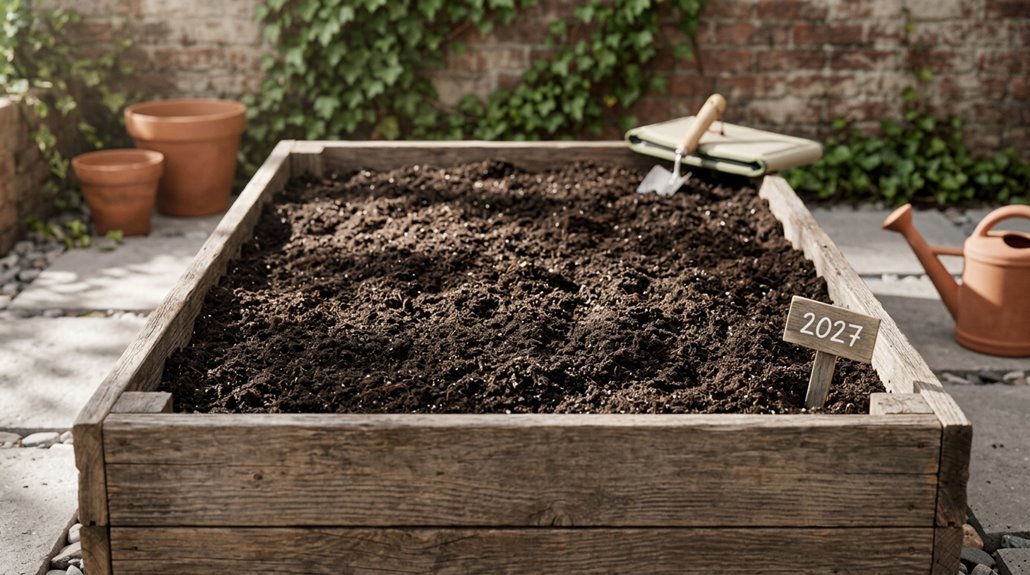
You’ll want to weigh several key factors before filling your raised bed, since getting the foundation right saves you headaches down the road. Bed depth requirements, drainage and aeration, nutrient content levels, soil composition balance, and organic matter ratio all work together to determine how happy your plants will be. Let’s break these down so you can make a smart choice without second-guessing yourself later!
Bed Depth Requirements
Depth is the unsung hero of raised bed success, and getting it right means the difference between stunted roots and a harvest worth bragging about.
You’ll want 6–12 inches as your baseline for most vegetables, but here’s where it gets interesting. Deep-rooted crops like carrots and tomatoes stretch their legs best in 12–18 inches, while compact growers (think lettuce and radishes) manage fine with just 6 inches. Perennials? They’re the divas of the root world, sometimes demanding 18 inches or more.
Now, resist the temptation to go skyscraper-deep. That impressive 2–3 foot bed looks great on Pinterest, but you’ll complicate drainage and wreck your back filling it. Instead, focus on quality: layer nutrient-rich topsoil or compost throughout the full depth to create prime real estate for root Zone A, where the magic of nutrient uptake actually happens.
Drainage and Aeration
How does water behave when you’re not looking? It pools, stagnates, and invites root rot if you’ve blocked its escape route. You’re building a raised bed, not a bathtub, so give that excess moisture somewhere to go.
Drill drainage holes, use permeable materials, or leave low-profile gaps at the base. Your roots need oxygen as much as they need water, and compacted soil suffocates them.
Here’s what improves airflow:
- Coir, compost, or coarse organic matter create those vital air pockets
- A breathable fabric liner keeps soil contained without trapping water
Skip the heavy, dense mixes that turn to concrete after rain. You want balance: enough moisture retention to sustain plants, enough internal airflow for root respiration.
Get this right, and your plants will reward you with vigorous, healthy growth!
Nutrient Content Levels
Where exactly do you think your tomatoes get the energy to pump out fruit all summer? It all comes down to what’s in your soil mix, friend.
You’ll want balanced macronutrients: nitrogen for leafy growth, phosphorus for roots, and potassium for overall vigor. But don’t stop there. Look for organic matter like compost or worm castings. They improve nutrient holding capacity and feed plants slowly, which beats a chemical rush any day.
Trace minerals matter too. Some quality blends pack 55+ minerals for complete plant health.
And here’s the secret weapon: living biology. Mycorrhizae and beneficial microbes create a thriving root zone that liberates nutrients efficiently.
Finally, check for slow-release fertilizers built right in. They’ll sustain your raised bed for weeks or months without constant babysitting. Your plants will thank you!
Soil Composition Balance
While you might be tempted to grab whatever bag’s on sale, getting your raised bed’s soil composition right from the start saves you a season of headaches and hungry plants.
You’ll want a mix that balances drainage with moisture retention. Combine lightweight organic matter with a well-draining substrate, and you’re off to a solid start.
For structure and nutrients, aim for a percentage blend of:
- compost
- peat-free potting soil, or
- coconut coir
This trio fights compaction while keeping roots happy.
Boost microbial life by working in worm castings or mycorrhizae, those beneficial fungi that partner with roots to unlock nutrients.
Keep your pH near-neutral, around 6.0 to 7.0, so vegetables and herbs actually absorb what you’re offering.
And please, skip the heavy, alkaline stuff. Your plants want crumbly, aerated soil that drains fast and lets roots dive deep. Waterlogged beds make for grumpy gardeners!
Organic Matter Ratio
Now that you’ve got your basic soil composition mapped out, let’s talk about the living, breathing heart of your raised bed: organic matter.
You’ll want 30–50% organic matter by volume. That’s the sweet spot where your soil structure, water retention, and nutrient holding capacity really sing. Here’s what to mix in:
- Compost (the workhorse)
- Worm castings (microbial gold)
- Well-decomposed mulch (skip the fresh stuff)
And avoid those bargain bulk soils with barely any organic content. They’ll compact into concrete and drown your roots. Not fun!
Top-dress with compost or leaf mold each season. Your soil biology will explode, nutrients release steadily, and you’ll build something that gets better every year. Think of it as feeding the soil that feeds you.
pH Level Suitability
How’s your soil’s chemistry doing? pH might sound like something you’d rather forget from high school science class, but it’s actually one of the biggest make-or-break factors for your raised bed’s success.
Most quality soils hit that sweet spot: pH 6.0–7.0, slightly acidic to neutral. This range keeps vegetables and herbs happy! You’ll find composts and organic mixes often land around 6.5–7.0, which optimizes nutrient availability.
Here’s why this matters: pH controls whether your plants can actually access iron, phosphorus, and manganese. Too far off in either direction, and you’ve got hungry plants in “rich” soil. Frustrating, right?
Moisture Retention Ability
Where does all that water go the moment you finish watering? In a raised bed, you’ve got one shot at getting this right, so listen up.
Soils rich in organic matter, especially peat-free mixes with coconut coir, grab onto water like a sponge, storing it in all those tiny pores. You’ll want to look for coconut coir or worm castings mixed in, because they boost water-holding capacity and cut down on how often you’re dragging out the hose. Compressed or expanded mixes that fluff up with water, creating a denser, moister home for roots, are also worth seeking out.
But here’s the kicker: you can’t just pack it in and walk away. Mulch that surface! A 2-3 inch layer slashes evaporation and keeps roots cooler.
Balance is everything. Retain too much, and you’ll drown those roots in rot. Get it just right, and you’re golden!
Plant Type Compatibility
What’re you actually planting in that bed? That question changes everything about your soil choice.
You’ll want OMRI-listed, pH-balanced blends matched to your specific crops. Water lovers like tomatoes and peppers demand moisture-retentive mixes with coconut coir or quality compost to keep roots consistently happy. But root crops need the opposite: light, well-draining soil that won’t compact around developing carrots or radishes.
For long-season vegetables, prioritize nutrient content and slow-release amendments that won’t burn tender seedlings or trigger nutrient lockout.
And don’t forget depth compatibility! Your raised bed configuration (whether 9-quart starter setups or 23.7-gallon volumes) must provide adequate root space for your chosen plants. Match soil to plant, container to root system, and you’ll eliminate most growing headaches before they start.